
We may earn money or products from the companies mentioned in this post.
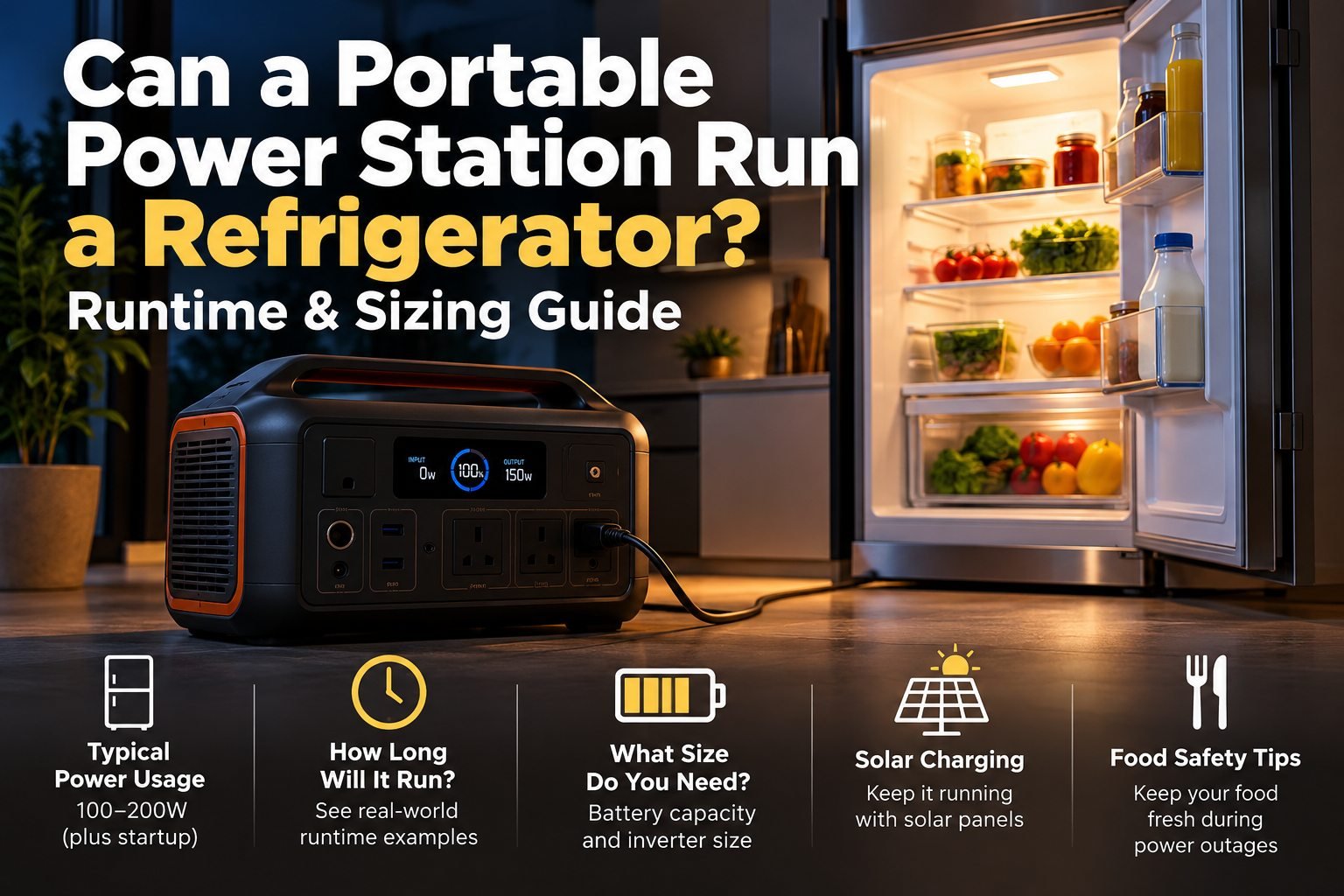
The best portable power stations for home backup help keep essential devices running during a power cut. The right choice depends on battery capacity, inverter output, refrigerator startup demand and how long the outage lasts.
For a short interruption, a 1,000Wh-class battery may be enough for a router, phone charging, lights and some refrigerator use. For overnight backup, consider more capacity or an expandable system. No compact power station is a substitute for a professionally designed whole-home backup installation.
Best portable power stations for home backup: comparison
| Model | Nominal battery | Continuous AC output | Best use |
|---|---|---|---|
| EcoFlow DELTA 2 | 1,024Wh | 1,800W | Essential devices and short outages |
| Anker SOLIX C1000 (original) | 1,056Wh | 1,800W | Refrigerator and electronics backup |
| EcoFlow DELTA 3 | Varies by exact model | Varies by exact model | Comparing newer options |
Check the exact model and regional specification before buying. Battery capacity is not the same as usable AC energy: inverter losses reduce runtime.
1. EcoFlow DELTA 2: flexible emergency backup
The DELTA 2 offers 1,024Wh of nominal storage and 1,800W continuous AC output. That combination can run many smaller essentials, provided their combined power draw and startup surges stay within the manufacturer’s limits.
Advantages: portable, suitable for everyday electronics, and compatible with additional storage. Limitations: high-wattage heating or cooking equipment can drain it rapidly. It is not designed to power an entire house.
Read our EcoFlow DELTA 2 review for more detail.
2. Anker SOLIX C1000: versatile 1kWh option
The original Anker SOLIX C1000 combines 1,056Wh nominal capacity with a 1,800W continuous inverter. It can be a useful option for a compatible refrigerator, internet router, lighting and device charging. Its expansion option is helpful when longer runtime is needed.
Advantages: good inverter rating and flexible use at home or outdoors. Limitations: the battery still needs recharging, and refrigerator compressor startup requirements must be checked. The original C1000 is different from the C1000 Gen 2.
See the manufacturer’s C1000 product information for exact compatibility and specifications.
3. EcoFlow DELTA 3: compare newer models
The DELTA 3 family is worth considering if you are buying new. Compare the precise model’s battery capacity, rated output, charging performance, switchover specifications and warranty. Do not assume every DELTA 3 variant is identical.
Our EcoFlow DELTA 3 review explains the trade-offs.
How much battery capacity do you need?
When comparing the best portable power stations for home backup, calculate your essential loads in watt-hours. Multiply average watts by hours of use. For a refrigerator, use measured average consumption where possible, because its compressor switches on and off.
| Appliance | Example use | Daily energy |
|---|---|---|
| Refrigerator | 50W average for 10 hours | 500Wh |
| Wi-Fi router | 12W for 10 hours | 120Wh |
| LED light | 10W for 5 hours | 50Wh |
| Phones | Estimated charging | 40Wh |
| Total | 710Wh |
This is an illustrative calculation, not a product test. A 1,024Wh station may cover the example with limited reserve after inverter losses. For longer outages, add more storage and plan for recharging. Our power station sizing guide explains the calculation.
What can you power during a blackout?
Refrigerator or freezer
Check the compressor’s startup surge as well as its running watts. A unit may have sufficient energy but insufficient surge output. Keep appliance doors closed to reduce energy demand.
Router, laptops and phones
These are generally practical backup loads. Compatible USB or DC connections may reduce conversion losses compared with running everything through AC outlets.
Electric heaters and kettles
Heating appliances draw substantial power. A 1,500W heater running for an hour requires about 1,500Wh before losses, exceeding the nominal energy stored in a 1kWh station.
Safe home backup connections
Plug compatible appliances directly into the power station as instructed by its manufacturer. Never connect a power station to a wall outlet to backfeed household wiring. If you want to power home circuits, ask a qualified electrician about approved transfer equipment and a compliant installation.
For additional guidance, consult the Electrical Safety Foundation International. A power station’s advertised UPS or EPS feature may not provide the transfer speed required by sensitive electronics.
Can solar panels recharge a power station during an outage?
Solar charging can extend runtime when sunlight is available, but cloud, shade, season and panel angle affect generation. Match panel voltage and current to the power station’s input specification. See our solar charging guide.
Important features to compare before buying
The best portable power stations for home backup combine adequate usable storage with enough continuous and surge output for your appliances. Also consider expansion batteries, mains charging speed, solar compatibility, battery chemistry, ventilation, warranty and safe storage conditions.
Frequently asked questions
Will a 1,000Wh power station run a fridge overnight?
Possibly, depending on the fridge’s average consumption and compressor startup demand. Measure its energy use and allow for inverter losses rather than relying on a generic runtime claim.
Can a portable power station power my whole house?
Most compact models cannot. They are better suited to selected appliances. Whole-home backup needs a much larger system and appropriate electrical integration.
Should I buy 1,000Wh or 2,000Wh?
For brief outages and a few devices, 1,000Wh may be sufficient. For a refrigerator and multiple devices over a longer period without charging, 2,000Wh or more provides greater reserve. Calculate your own loads first.
Final verdict
The best portable power stations for home backup are the ones sized to your essential appliances and realistic outage duration. Compare the original Anker SOLIX C1000 and EcoFlow DELTA 2 for portable 1kWh-class backup, then consider newer or expandable models if you need longer runtime.
For further comparisons, read our portable power station buying guide.
Editorial note: This guide is based on published specifications and illustrative calculations, not hands-on product testing. Always check manufacturer instructions and exact model ratings.
Pingback: Pecron Battery Guide: 6 Essential Checks Before Buying