
We may earn money or products from the companies mentioned in this post.
LiFePO4 vs lithium-ion portable power stations: which battery type should you choose? LiFePO4 is itself a type of lithium-ion chemistry, so the comparison usually means LFP versus alternatives such as NMC. If you are comparing portable power stations, you will often see batteries advertised as LiFePO4, LFP or lithium-ion. The terminology can be confusing because LiFePO4 (lithium iron phosphate) is itself a type of lithium-ion battery. In buying guides, ‘LFP vs lithium-ion’ usually means LFP compared with other lithium-ion chemistries such as nickel manganese cobalt (NMC). Here is what that difference means for camping and home backup.
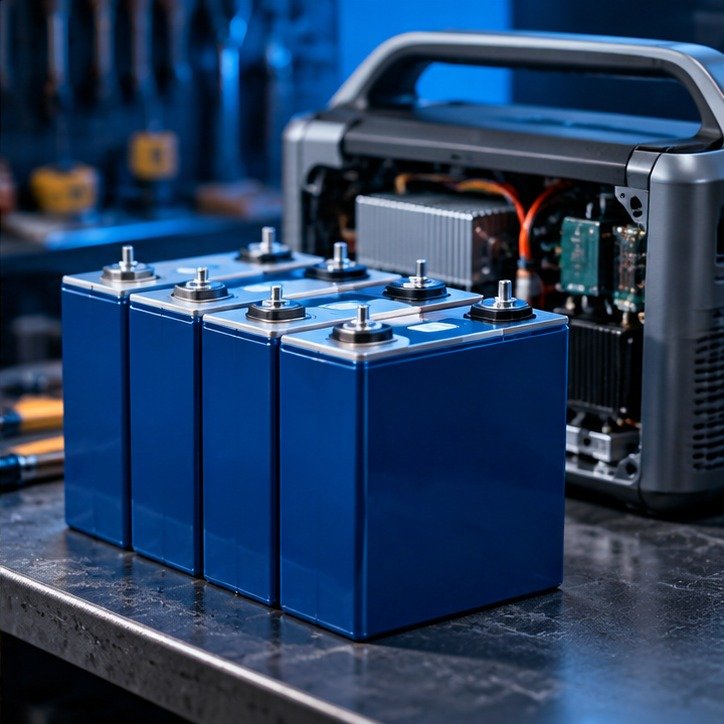
What is LiFePO4 (LFP)?
LiFePO4 uses lithium iron phosphate as its cathode material. Other common lithium-ion chemistries use different cathode materials. These chemistry choices affect energy density, thermal behaviour, cost and service life. They do not by themselves determine the quality of the finished power station: cell manufacturing, battery-management software, enclosure design and electrical protections matter too.
LiFePO4 vs lithium-ion portable power stations: key differences
| Consideration | LFP / LiFePO4 | NMC and similar chemistries |
|---|---|---|
| Cycle life | Often higher in comparable use | Often lower, but model-dependent |
| Energy density | Typically lower | Typically higher |
| Weight for equal energy | Often heavier | Often lighter |
| Thermal stability | Generally more thermally stable | Requires careful thermal management |
| Cold-weather charging | Restricted at low temperatures | Also restricted; check model limits |
When comparing LiFePO4 vs lithium-ion portable power stations, remember that these are broad chemistry trends, not a substitute for the specifications and warranty of an individual product. A well-designed NMC unit may outperform a poorly designed LFP unit in other important respects.
Does LFP last longer?
LFP products often advertise several thousand charge cycles, which can be attractive for frequent camping or home-backup use. But cycle-life claims are only comparable when tested under similar conditions and to the same remaining-capacity threshold. For example, 3,000 cycles to 80% remaining capacity and 4,000 cycles to 70% are not directly equivalent claims. Heat, charging rates, depth of discharge and storage conditions also influence battery ageing.
Is LiFePO4 safer?
LFP chemistry is generally more resistant to thermal runaway than some higher-energy lithium-ion chemistries, but no lithium battery is risk-free. Faulty chargers, damaged cells, manufacturing defects and improper storage can still create hazards. Choose a reputable product with suitable protection systems, follow the manufacturer’s instructions, and never charge or use a visibly damaged battery.
What about weight and portability?
Higher-energy-density chemistries can store the same energy in a smaller or lighter cell package. However, the power station’s total weight also includes the inverter, case, fans, wiring and outlets. Always compare the finished unit’s weight rather than assuming chemistry alone determines portability.
Cold weather and battery performance
Lithium batteries generally deliver less usable energy in cold conditions, and charging restrictions can be especially important below freezing. Some products have temperature-controlled charging or battery heaters, while others simply block charging outside the specified range. Never bypass a temperature protection system; consult the model’s manual before winter camping.
Which chemistry should you choose for camping?
- Choose a well-specified LFP station if long cycle life and regular repeated use are high priorities.
- Consider total weight, size and output if you carry the station long distances.
- Check warranty terms and the capacity-retention threshold, not just the advertised cycle count.
- Prioritise electrical safety, outlet selection, solar compatibility and after-sales support over chemistry marketing.
Real-world buying example
Both the Jackery Explorer 1000 v2 and the EcoFlow DELTA 2 use LFP batteries, but they differ in weight, rated AC output and expandability. That is a useful reminder that battery chemistry is only one part of a buying decision.
For background on lithium-ion battery technology, see the US Department of Energy’s battery information.
Bottom line
LiFePO4 is a lithium-ion chemistry, not an entirely separate battery category. It is often a strong choice for portable power stations because of its cycle-life and thermal-stability characteristics. Compare complete products on usable capacity, weight, inverter output, charging, warranty and price before deciding.